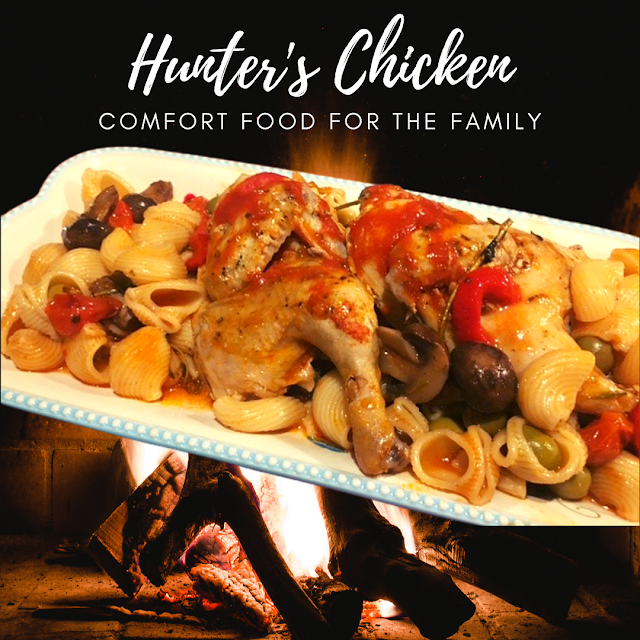
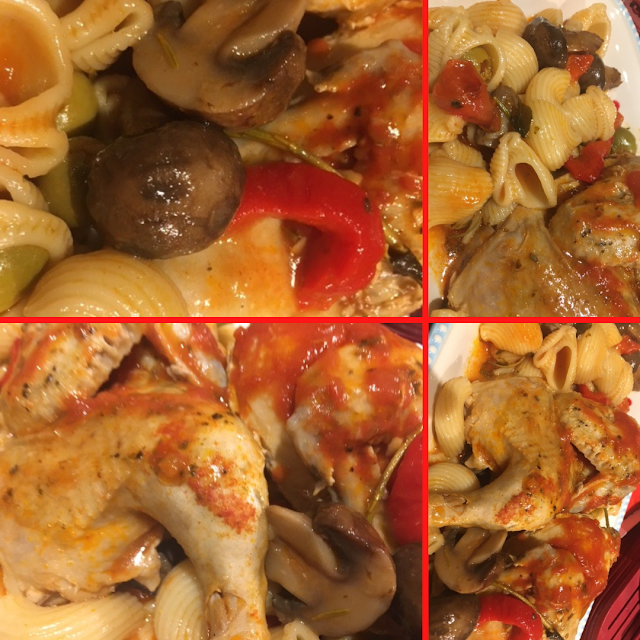
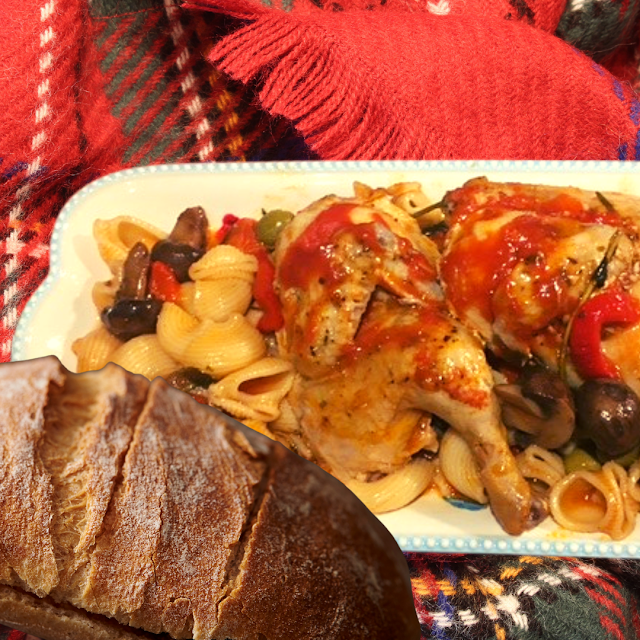
During the time that we owned an Italian Restaurant, I made lots of Chicken Cacciatore. My husband liked to call it Hunter’s Chicken to give it a more ‘rural comfort food’ appeal. The menu said one thing, but Joe called it something else!
Hunter's Chicken
During the time that we owned an Italian Restaurant, I made lots of Chicken Cacciatore. My husband liked to call it Hunter’s Chicken to give it a more ‘rural comfort food’ appeal. The menu said one thing, but Joe called it something else!
Ujhazi's Rooster Soup
When I first saw the story behind Ujhazi's chicken soup, I knew I had to make it and write about it! I have anxiously awaited reaching “U” in my alphabetic list of Foods Named After Famous People!
My dad’s baby brother was a bachelor. In all honesty, we would call him a bachelor who liked women, drink and partying! He worked but enjoyed the times he wasn’t working … the most! He was also always taken care of by my dad and my dad’s baby sister, who we lovingly called “Sissy”. Uncle Peck (aka Wilburn) lived with Sissy’s family much of the time and when they all started aging and he no longer worked, she had a house trailer moved to her property so he could be independent, but so she could make sure he was fed and taken care of. He was a favorite of me and my siblings, even though his lifestyle was just the opposite of our family’s lifestyle. There were times that my dad … the Southern Baptist Deacon … had to go find him and retrieve him from one of those weekend parties!
What does any of that have to do with chicken soup? The story really begins right after World War II. Daddy and Uncle Peck had returned home. Daddy was busy building a house for his little family. Uncle Peck was busy being a “party animal” in the post WWII days! Uncle Peck was living with his father in a little house just a block from where I grew up. Uncle Peck had a prized fighting rooster.
On a day when Mother and Sissy decided they should make chicken and dumplings for the family, the old rooster had been especially annoying. Mother always said you couldn’t walk through the chicken pen to feed them without dodging attack of the old rooster. The two pious women probably felt that Uncle Peck shouldn’t be gambling with that rooster … so the rooster ended up in a pot of hot water, simmering away for a rich broth that made really good dumplings!
Can you imagine Uncle Peck’s temper tantrum when he discovered what they had done? Daddy told the story saying that Peck looked like an old rooster flapping his arms, strutting and yelling. I have never known if Uncle Peck ate any of the dumplings.
The original recipe for Ujhazy Chicken Soup calls for a rooster … not a hen. In order to have edible tender meat, that rooster would have cooked for a very long time! The broth would have been rich and flavorful!
I’m going to share the supposed original recipe with you today, but I’m going to share some short cuts to a wonderful chicken noodle soup. Phoebe and I made it on May 29, when temperatures are usually in the 80s. Not on this day! Temperatures were in the 50s and soup was in order. (Truth is, we love soup twelve months a year!)
There is a wonderful 2015 article online from www.food&wine.hu that describes the importance of this soup. I happily cite it as my source for the following:
“Brueje” comes from the Middle High German language that disappeared by the end of the 15th century. The word meant “hot liquid”. The next word that came in line was “Bruhe” and it had a little different meaning. “Soul-warming” giving health and strength … became attached to the new word. Soup and broth were also directly associated with the launching of restaurants in the mid-1700s. One of the first restaurants to send the message “all those whose stomachs are suffering and who need repair … come to me” was Mr. Boulanger’s restaurant in Paris … build in 1765. Soups and broths have continued through centuries to be an important part of every good restaurant’s menu! The notion that soups make us feel better and are healthy eating is not just a notion. Cooking meats and vegetables in water to make the broth … takes the nutrients from those ingredients and puts them in the broth … all of which is easier to digest because of the cooking. It is safe to say that the broth may be more nutritious than the meat cooked to make it!
Ede Ujhazi was born in 1841 and died in 1915. While his food desires date to earlier times when goulash and lots of paprika made Hungarian food what it is … his acting talents and skills were modern for the times. According to writings from the times, this actor was excellent because he was intelligent. He was a student of history. He understood what was emerging before him. All combined, it made him one of Hungary’s greatest.
The original recipe for this soup has been changed many times, I’m sure! The following is probably very close. It is also a time consuming process, but nothing would be better than enjoying this simmering away on a cold day … or on any day when comfort food is required!
Rooster Soup!
Begin with a 3- pound chicken and cut in into 8 pieces. Put it in a big pot of water to begin cooking. You’ll need 2 to 3 quarts of water. If the chicken is old … or by chance a rooster … bring it to a boil and simmer it for 45 minutes before you add any vegetables. If the chicken is a young hen, add the vegetables at the beginning.
Add:
2 big carrots, cut in half
1 onion, peeled and cut into quarters
1/2 pound brussels sprouts
2 parsnips, cut in half
1 stalk of celery
2 cloves of garlic
2 teaspoons of salt
10 whole peppercorns
1 teaspoon caraway seeds
1 teaspoon paprika
1 Tablespoon tomato paste
Cook all of this for 1 hour. Strain the soup, reserving the broth … and holding the meat and vegetables.
Put the broth back in the pot and add 1 cup of vermicelli noodles or egg noodles that you like best. Add 2 cups sliced mushrooms and let this simmer while you prepare the other ingredients.
As the soup simmers, remove the chicken meat from the bones and cut it into bite size pieces. Work with all the vegetables, cutting them into bite size pieces. Add all this back to the soup pot and simmer for 20 more minutes.
When the mushrooms and noodles are done, add lots of chopped fresh parsley and serve.
Sound delicious? Sound like a 3-hour project? It is well worth the investment of time and effort, but here’s a quick version!
Rotisserie Chicken and Noodle Soup
After you’ve enjoyed a meal from a supermarket rotisserie chicken, save the carcass for soup the next day. You can also pop it into the freezer for soup a couple weeks later! Begin the soup by sauteing some vegetables in olive oi. I love garlic infused olive oil for this soup. I sauteed 2 spring onions, 2 carrots and half a green pepper … chopped into soup-size pieces! If you enjoy greens in your soup, add chopped greens at this point, too. I added a giant leaf of rainbow chard including the colorful red stalk.
While the vegetables are softening, pull all the meat off the chicken carcass and set it aside. Add 2 quarts of water to the soup pot and drop the carcass in. I use any fat or skin that might still be attached to the carcass, too. Let this simmer for 30 minutes. The vegetables should be done by then and all those rotisserie herbs will have added tremendous flavor to the broth.
Taste the broth and if it needs salt and pepper, add it. Drop in some caraway seeds and paprika if you want a true Hungarian flavor! A dribble of tomato sauce, catsup or a tablespoon of tomato paste improves the flavor. At this point, I like to add a little “Better than Bullion” in the roasted chicken flavor. You might also need as much as another quart of water.
Finish the soup by adding a cup of uncooked noodles or tiny pasta. Garnish it with fresh parsley. Delicious! In less than an hour, you have a soup that tastes and smells like it cooked all afternoon!
Luisa's Tetrazzini
Many years ago, I was responsible for preparing a luncheon meal for 40 women. The budget was small, so I was looking for something delicious that was not costly. The menu was scrumptious and I ended up spending just a little more than one dollar per person. My salad was a frozen gelatin based fruit salad that tasted more like dessert than salad! Dessert was was a browned coconut topping oatmeal cake. The entrée … which I’d never made before but have made many times since … was Chicken Tetrazzini!
![]() |
| Touring in the United States |
Turkey or Chicken Tetrazzini was named after an Italian opera singer, Luisa Tetrazzini, but was created in the United States. The recipe was first published as one of her favorite foods in 1911. However, Good Housekeeping published the first reference to the dish in 1908, indicating that it could be found at a restaurant on 42nd Street in New York City. There are various stories about when and where it was actually created, but two stories are my favorites! No matter the story, many people think this is an Italian recipe!
Luisa Tetrazzini was born in 1871 in Florence, Italy. She
began singing at the age of three. In
the 1890s, she was a highly popular soprano with a concert career in Europe and
in America. Her popularity came from a
voice that had an incredible range. She
brought everything she sang … to life!
She made her debut in the United States in San Francisco in 1905. She loved San Francisco. In a second story, Tetrazzini made her
American debut at the Metropolitan Opera House in New York City in 1905. This is why we have conflicting accounts of
the origin of the recipe!
Recipes for Chicken or Turkey Tetrazzini have been printed in cookbooks and magazines … and newspaper columns … for decades! There are many varieties, but this is one of those dishes that I always used canned soup in. Sometimes I make my own cream sauces and skip the soup, but not in this recipe! The flavor is not the same without Cream of Chicken Soup!
This is a perfect recipe to make after Thanksgiving,
when you have lots of left over turkey meat.
Today, rotisserie chickens from the supermarket are so popular and make
such an easy weeknight meal, home cooks frequently have meat left over from
that! Use it in this recipe!
This is a good oven casserole or an afternoon crock
pot dish! It is easily doubled. Here ya go!
Turkey Tetrazzini
2 cups of cooked chicken or turkey in bitesize chunks
8 ounces of uncooked spaghetti
8 ounces fresh mushrooms, sliced
1 can of Cream of Chicken soup
Fill the can half full of sour cream
Measure a whole can of half and half or whole milk
1 1/2 cup shredded cheddar cheese
A handful of fresh chopped parsley
1 teaspoon of onion powder
1/2 teaspoon of celery flakes or celery seed
2 Tablespoons of roasted red bell pepper or pimento – optional
Break the spaghetti in half and cook it about halfway. It will cook the rest of the way in the
casserole or crock pot.
Sauté the mushrooms in a couple pats of butter. I like to drop the mushrooms is really hot
butter so they brown quickly.
Mix all the ingredients together and bake at 350
degrees for about 45 minutes. Cover the
casserole with foil for the first 30 minutes, then finish the casserole
uncovered. If you are preparing in a
crockpot, cook on low for 3 hours.

Singing in the streets of San Francisco! Her favorite American city.
![]() |
This post is part of my 2021 foodie project! Foods Named After Famous People!
I’ll shar with a couple blog parties, so look at my
short list on my sidebar.
Enjoy!
Strawberries Romanoff
It is almost strawberry season in Southern Illinois and my family can hardly wait! Sometimes we pick our own and other years we just buy them from our favorite orchard stand.
When I chose the topic of Strawberries Romanoff for my
blog post, I figured I’d be writing about the historic Russian Romanov family
and how some famous chef named this dish after them. Not!
The first thing we need to know is that Strawberries
Romanoff sounds like something extravagant and elegant. It looks pretty, but it is really just fresh
strawberries macerated in sugar and topped with a combination of ice cream and
whipped cream … or sour cream and whipped cream … spiked with orange liqueur or
brandy. The famous chef, Escoffier created
the recipe. He served it at the Carlton
Hotel in London and called it “Strawberries Americaine Style”. It was
a character named Hershel Geguzin who named the famous dessert after a
restaurant in Beverly Hills, California!
Geguzin was born in Lithuania in 1890. He went to Hollywood and changed his name to
Michael Romanoff. While he claimed to be
a member of Russia’s royalty, he was a con man who immigrated to New York City
when he was 10 years old. He first
changed his name to Harry F. Gerguson.
Sometimes he pretended to be a Count and other times a Prince and nephew
of Tsar Nicholas II. He was neither.
In the 1940s and 50s, he owned “Romanoff’s”, a restaurant that was very popular with Hollywood stars. It was at this establishment that he copied Escoffier’s strawberries.

Romanoff dining with his dogs. Photo credit: Wikipedia
Romanoff’s restaurant served good food. It was popular for having well trained
waiters and beautiful cigarette girls!
The restaurant was popular, but not
because of the owner/host’s personality.
Instead of mingling with his patrons, he had meals with his dogs.
Michael Romanoff was also an actor. He was in several movies and sometimes his role was that of Prince Romanoff! What a character!

I want to share a couple variations of this beautiful dessert. I bought these cute miniature angel food cakes at a bakery. I brushed them with a combination of Grand Marnier and orange zest. Because I wanted the shape of the cake to be visible, I put the whipped cream/sour cream combination under the cake.
This trifle is a bit more
complicated, but not too much! I
macerated the berries in sugar and brandy.
The whipped cream on top is spiked with a little brandy. The vanilla pudding is instant, but I whipped
in a cup of sour cream after I made it according to the box directions. This is just as good using chocolate pudding
or tapioca pudding. If you are really
busy, don’t hesitate to buy a bucket of pudding from the dairy counter. How
easy?
I'm posting this as part of my 2021 foodie project, Foods Named after Famous People! I'll share with a couple blog parties, too ... so check out my short list on my sidebar.
Queen of Sheba Chocolate Cake
My dad had a great sense of humor and he had a special way of putting people ‘in their places’ when they were being disrespectful. One of his favorite Bible stories to use to ‘crush’ gossipers was the story of Solomon and Sheba. When folks would begin to gossip about the marital escapades of others, Daddy would remind them of Solomon’s many wives, concubines … and his affair with the Queen of Sheba! That would usually turn off the gossip.
![]() |
| Raphael's Solomon and Sheba |
Most of us know the story of the Queen of Sheba. The stories vary, depending upon the religious
text! Sheba visited Solomon, gave him
many gifts after testing and marveling at his wisdom. Solomon wanted her, but she didn’t believe in
his lifestyle and did not ‘lie’ with him until he tricked her on the last night
of her visit. He promised Sheba that he
would not touch her if she did not touch anything in his palace. He had made sure the cooks fed her spicy food
at the banquet that night. The story says
that she was thirsty in the night and reached for a pitcher of water. … touching it … and breaking her promise. Solomon, of course, seized the moment. On her journey back to the Kingdom of Sheba,
she gave birth to Solomon’s son. She
named him Menelik. Menelik and his 200
descendants following, ruled in the ways of Judaism.
Who was this Queen? Where did she really come from? Was she white or black? The earliest sculptured likeness of Sheba shows us a face that looks neither black nor white. Raphael painted a white Queen. If she was from Ethiopia, was she black? If she was from Arabia, was she white? Who really knows?
The ancestry of the Kingdom of Sheba goes back to
Noah. Two of his sons had descendants named
Sheba. One son’s people were in Ethiopia
and the other in Arabia, just across the Red Sea (a distance like going across
the Mississippi River). The Kingdom of
Sheba spread across both regions. I don’t
think there is really much mystery there.
I also think she would have had dark skin, no matter which part of that
region she was from.
The Mariners' Museum holds a bust of the Queen of Sheba in their collection. It is clearly a black female. The bust dates to 1853 and was probably a ship captain's cabin ornament. There is a hiding place in the back of it. It is believed that this bust was carried on the ship also named "Queen of Sheba" that ran between London and New Zealand.
Now we get to the rich chocolate cake that is named for the Queen of Sheba! Not much is known about the history of this cake. It is actually a pretty common recipe, but at some point along the line, somebody named it after a black queen instead of calling it chocolate.
This cake is rich and filling! Plan to serve small pieces, and I think it
can only be improved upon by serving it with good coffee!
![]() |
| Picture from Creative Commons |
4 oz semi-sweet chocolate squares
2 Tablespoons of rum
1/2 cup unsalted butter, room temperature
⅔ cup sugar
3 large eggs, whites and yolks divided
¼ tsp cream of tartar
1/2 tsp salt
1 tbsp sugar
3/4 cup almond paste
¼ tsp almond extract
½ cup all-purpose flour
For the icing:
1/3 cup semi-sweet chocolate chips
2 Tablespoons rum
6 Tablespoons unsalted butter room temperature
Begin this recipe by beating the 3 egg whites and the cream of tartar until stiff peaks form. Set this aside.
In a microwave, melt the chocolate squares a few seconds at a time, so you don’t over do it! Stir in the rum to smooth the chocolate.
In a big bowl, whip the sugar, salt, almond paste and almond extract with the butter. When this is creamy, beat in the egg yellows and the flour.
Now it is time to gently fold in the egg whites until incorporated. Bake in a prepared 9-inch cake pan at 350 degrees for 30 minutes.
Preparing the icing is quite simple. Melt the chips in the microwave, a few seconds at a time. Stir in the rum and let it cool. Whip it with the soft butter. Spread it on the cooled cake. It should be glossy.
This column is part of my 2021 foodie project! Click he menu button to see other columns about foods named after famous people.
Parmentier's Potatoes
I have written about the history of potatoes more than a few times. A few years ago, when I was teaching children how to prepare foods made with products grown in Southern Illinois, we made a map of the route of the potato! We traced it from Peru to Spain and then through other European countries. In many of those countries, potatoes were only grown for feed for stock. In Prussia, King Frederick the Great planted potatoes and staged armed guards around them during the day. By night, the locals would sneak in and steal the potatoes thinking they were rare and valuable!
In France, potatoes were grown to feed pigs … that is until a
famous agronomist and pharmacist promoted the potato as food for humans. Antoine-Augustin Parmentier learned about the potato when he was a prisoner of the Seven Year War and was held in Prussia. He returned to Paris in 1763 and started his quest to feed hungry people with potatoes. Finally, in 1772, the Paris Faculty of Medicine declared potatoes edible.
Parmentier was my kind of
foodie! He was appointed to teach at the
Free School of Bakery and what he taught was that a bread made with potatoes was
just as good as wheat bread. He
publicized the potato using stunts that I have to say I would have been happy
to try! He had lavish dinners with
guests like Ben Franklin … featuring potatoes!
He gave bouquets of potato blossoms to the King and Queen. He copied King Frederick’s stunt and grew
potatoes by guards, so the impoverished people would
steal the plants at night!
In 1785, potatoes staved
off famine in northern France and four years later, Parmentier published the Treatise
on the Culture and Use of the Potato which was printed by order of the
King.
It is important to note
that potatoes were not the only passion of Parmentier! He studied and published about baking bread,
making cheese and storing grain. He
taught people to use cornmeal and chestnut flour. He used mushrooms, mineral waters and
studied wine-making.
Parmentier died in 1813, but he left quite a legacy, so much so, that his burial plot was surrounded by potato plants and is now surrounded by flowers. There are streets named after him and a bronze statue of him is located at Montdidier. Below the statue is a marble relief of seed potatoes being distributed to a peasant.
In the 1870s, chefs began
naming foods after him. A potato and
leek soup is named Cream Parmentier.
Salt cod mashed with olive oil and potatoes is called Brandade de morue Parmentier. There are cubed potatoes fried in butter
named Garniture Parmentier … mashed potatoes called Puree Parmentier … and
potato salad named Salade Parmentier.
Today, I’m sharing one of
my favorite comfort foods. Some call
this dish Cottage Pie and others call in Shepherd’s Pie. “Hachis Parmentier” may have been the
original creation of this deliciously filling dish.
Often times, cooks make Cottage Pie using leftovers and there is nothing wrong with that. You can even break up a couple pieces of meat loaf to use as the base. Pot roast, rotisserie chicken, a chunk of pork roast … all work. You could also make a meatless pie! Some folks use tomato in their filling for the pie. It really is your choice and one of the best ones I’ve ever made was with a little leftover grilled salmon, carrots, corn, peas and a creamy sauce … all topped with mashed potatoes with a little extra garlic stirred in. Use your imagination.
Cottage Pie or Hachis Parmentier
FILLING: I made this recipe using fresh and frozen
products. I chopped a big tomato and
kept it ready to add to the stewed ingredients.
Brown 1 pound of ground
beef and a half cup of chopped onion.
Add salt and pepper it generously.
Add 2 cups of frozen
mixed vegetables and 2 cups of beef stock.
Let the ingredients simmer for a couple minutes, then add the fresh
tomato. Continue to cook the ingredients
until the tomatoes disappear into the stock.
Finish seasoning by adding a heaping Tablespoon of tomato paste, a dash
of garlic powder and tiny bit of sugar.
Thicken the sauce by adding one more cup of broth (or water) with 2
Tablespoons of corn starch blended in.
TOPPING: You will need 4 cups of mashed potatoes to
have enough topping for this much filling.
Make the mashed potatoes like you usually do. Let them cool, so you can drop an egg in and
not have it scramble! Whisk in the egg,
salt and pepper and 1 cup of shredded cheese.
For this recipe, I added about a cup of shredded cooked carrots … for
flavor and color!
Whip all this together
and spread it over the filling. For
additional color, sprinkle paprika and/or parsley over the top. Bake at 350 degrees for 30 – 40 minutes until
the top of the potatoes brown a little.
You can make all this the
day before and refrigerate it. Put cold
ingredients together but bake for about
50 – 60 minutes.
I’ve post this as a part of my foodie project for 2021. Enjoy!
Potatoes O'Brien
A very common American breakfast food may take us back to
mid 1800s Ireland! While some believe that a cook in a New York City restaurant nicknamed “Beef Stew O’Brien” may have created the dish, food historians believe that there is a true link to William Smith O’Brien who was born in County Clare, Ireland in 1803. Was William an ancestor of our New York City cooks, or was he just a patriot celebrated by generations of Irish Americans?
William Smith O’Brien was an Irish nationalist and a Member of Parliament. He was a leader in the Young Ireland movement, and he encouraged Irish citizens to use the Irish language. He participated in the Young Irelander Rebellion in 1848 and was convicted of sedition. The Irish didn’t have ‘freedom of speech’. He was initially given a death sentence, but that was changed, and he was deported to Van Diemen's Land, which is now Tasmania in Australia. A few years later, he was released but still exiled from Ireland. Finally in 1856, O’Brien was released, and he returned to Ireland. He stayed away from politics, however!
![]() |
| William Smith O'Brien |
High King Brien I could list generations of O’Brien’s ancestors, but what might be most important is that he was a descendent of the Ard Ri Brien Buro, the High King of Ireland. The term ‘Ard Ri’ is a very old term dating to the times that the Vikings were ransacking Ireland. In the year 999, High King Brien rescued Dublin from the Vikings and started rebuilding Ireland. Had I been William Smith O’Brien, I would have been passionate about maintaining heritage. Had I been that breakfast cook ‘Beef Stew O’Brien”, I would have been proud to claim the High King’s family as my own!
Potatoes O'Brien
My recipe for these potatoes probably changes each time I make them! Really! I like mine with bacon in them, but you can skip the bacon and use butter or canola oil … or olive oil.
Bacon grease or replace with 3 Tablespoons of canola oil.
2 Tablespoons of butter, used half at a time.
1 large red bell pepper diced
1 large green bell pepper diced
1 medium sweet onion, diced
2 pounds of potatoes, peeled and diced
1 Tablespoon roasted garlic
1 teaspoon salt
1 teaspoon black pepper
In a heavy skillet, gently fry the
bacon until brown. Remove the bacon but
use the grease. Add a Tablespoon of
butter to the grease and sauté the peppers and onion until they start to look
glossy. Add the potatoes, garlic, salt
and pepper. Put a lid on the skillet and
cook until the potatoes are done.
It is important to stir the potatoes a few times to keep them
cooking evenly, but the lid lets them steam and they will get done more quickly. When the potatoes are done, remove the lid and add that extra Tablespoon of butter. Turn the burner to high and keep stirring the potatoes for a couple minutes until they get crispy, and the moisture disappears. Stir in the bacon bits at the end of cooking.
This post is part of my 2021 foodie project! Click the menu tab to see other recipes for foods named after famous people.
Lobster Newberg or Wenberg?
Brothers, Louis and Benjamin Wenberg were natives of Portland, Maine but moved to New York City and continued their father’s shipping business. Benjamin was a part of the New York Bar Association, but his wealth came from the slaving trade during the 1830s and 40s. Were people aware of this? Maybe but maybe not. It was not uncommon for the trade to be kept underground and ships that carried slaves also carried products like palm oil. Benjamin Wenberg and his brother were affluent members of the Maritime Exchange, so all that they were doing was done under the cloak of legitimacy.
During their heyday, New York’s Delmonico’s Restaurant was very popular. Ben introduced Charles Delmonico to a rich dish of lobster meat covered in a sauce made from clarified butter, cream, sherry and thickened with an egg yolk. The dish was loved by the restaurant patrons and was originally named “Lobster Wenberg”.
![]() |
| Charles Delmonico |
Was this really a new creation? There were several sauces just like this one already in printed cookbooks at the time. One in particular was served over turtle. Delmonico’s added cayenne pepper to their recipe, but other than that, the sauces were identical.
It is important to note that any seafood can be substituted in the recipe I’m going to share with you today. You can serve it as a main entrée or in smaller portions as an appetizer. We love it over puff pastry shells, but it is equally good over toasted bread or English muffins.
Lobster Newberg
1/3 cup butter
2 tablespoons flour
2 cups Half and Half
4 egg yolks
2 cups cooked lobster meat
1/4 cup dry sherry
2 teaspoons lemon juice
Dash of salt teaspoon salt
Dash of cayenne pepper
Gently melt the butter in a heavy deep skillet. Stir in the flour and continue to blend it with a whisk until is starts to bubble. Don’t let it turn brown. Pour in the Half and Half and over medium heat, continue to whisk it until it thickens.
Beat the egg yolks until they are smooth. At this point you want to temper the egg yolks by adding a little bit of the hot cream sauce a little at a time. If you pour the egg yolks directly into the skillet, you’ll get scrambled eggs! Slowly add the tempered yolks into the skillet and continue to whisk. The sauce should turn colors and become even creamier. Drop in the lobster meat and simmer it for a few minutes until it heats through. Add the sherry, lemon juice, salt and pepper. Stir to combine and serve immediately over toast points or puff pastry. Garnish your plate with chopped parsley. Delicious and very festive. This makes 4 entrée servings or double that as an appetizer.